
Can golf go green?
A reflection on my past few months working at a golf club.

The last few months, I’ve been neglecting my list of unfinished China-related articles to help run my family’s (surviving) business: a golf club. It sounds privileged, but it comes with many struggles: economical, ecological, and above all, social.
As an eco-farmer-writer-advocate, working on a golf course was challenging, to say the least. I found myself conflicted on many fronts. Now I am back working in Hong-Kong. The city was host this weekend of the controversial LIV Golf, sponsored by Saudi Arabia. An ideal timing to put down some reflections on the past few months.
Full disclosure: our golf club is for sale.
A word on context
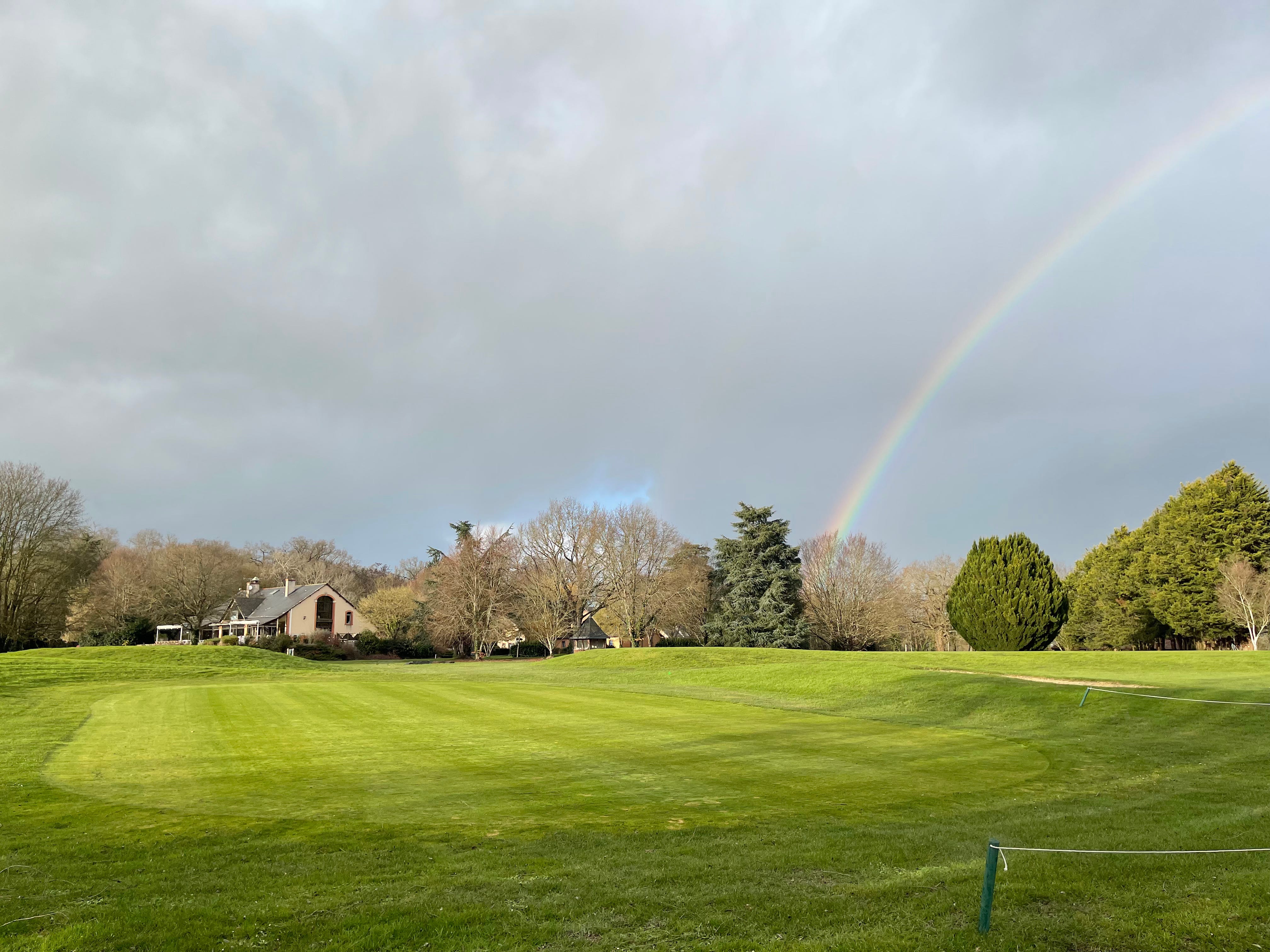
Our golf course is located in the North-west of France, in the Loire Valley. It is one of around 800 in France and roughly 38,000 worldwide.
Like many others, our golf course was created in the 1990s, during a time when golf was booming and land regulations were loose. Courses were often built alongside real estate developments or tourism projects. In our case, my grandfather decided to convert agricultural land into a 18-hole course, supposedly to diversify income.
Compared to the 1990s, nowadays golf is a mixed success as a sport and an economic model. It struggles with its reputation: elitist, aging and politically loaded. Even if the pandemic boosted the sport, most of the 47 million players worldwide are above their fifties). Maintaining a golf course is also notoriously expensive, with extremely high “greenkeeping” costs. Most courses diversify to survive.
Increasingly, golf courses also face scrutiny in terms of water use, pesticide applications, and land consumption. Many have been targeted by climate protesters in many creative and surprise ways (like filling the green holes with concrete, which is not a carbon neutral product, from my understanding).
i. Is golf eco-friendly?
My first impression of golf was that it was ecologically nonsensical. Golfs are terraformed environments sculpted by man, therefore unnaturally beautiful. There is no crop to harvest. The only thing that is purposely grown is grass - which is, I learnt over time, its own type of agronomical art.
Some studies estimate that golf courses can use two to five times more pesticides per hectare than conventional farming. Constantly fighting nature to mow and blow and spray for no particular output felt unreasonable.
And even if some parts are left alone, they are often fenced off and disconnected from surrounding landscapes. On top of that, a system of underground pipes irrigates the greens and drains the land. In the United States alone, golf courses collectively use around 1.6 million acre-feet of water per year (over 500 billion gallons).
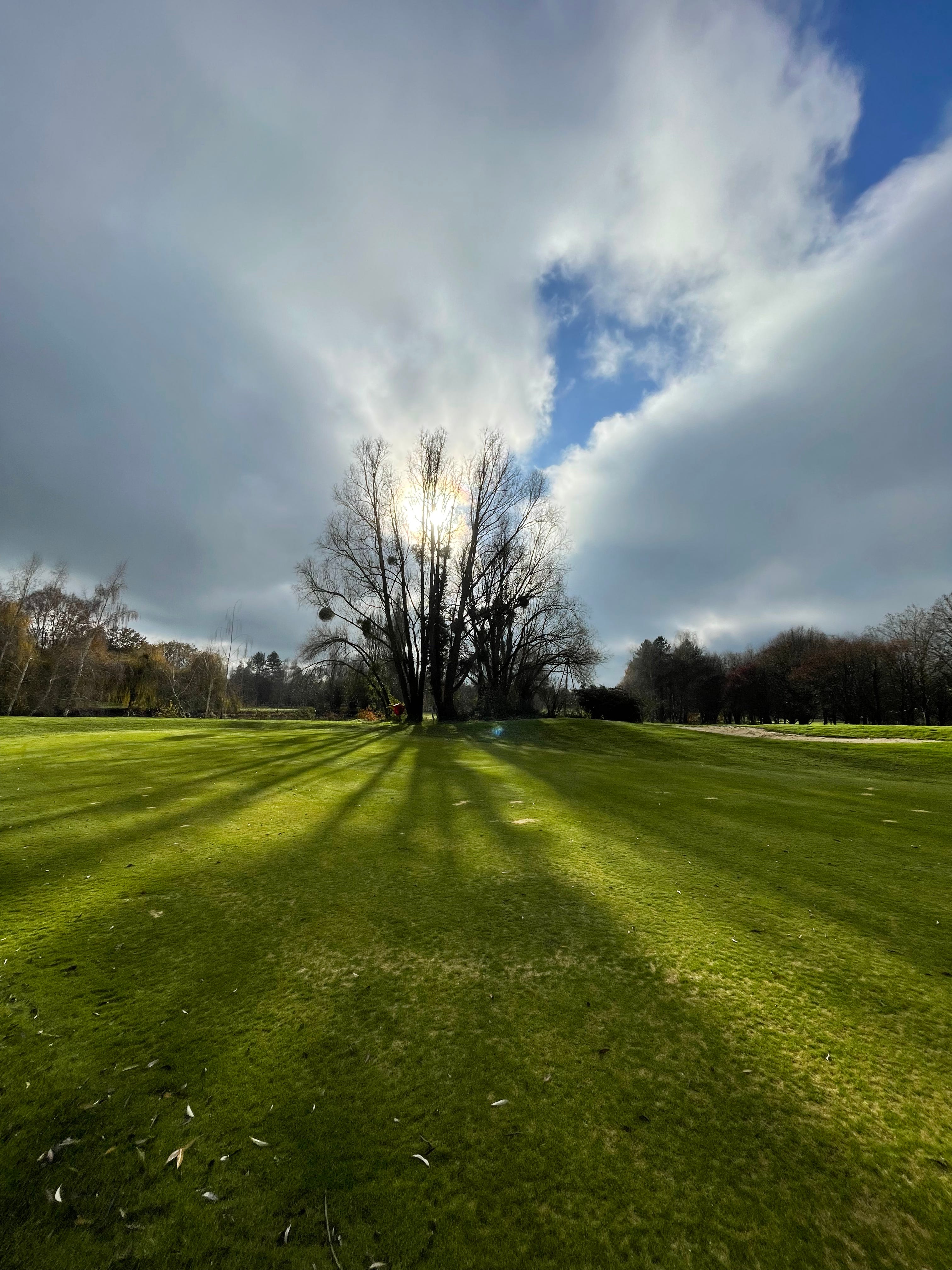
And yet, after a few hours of plugging wild boar holes, it did grow on me. Our golf is particularly stunning: spread over about 80 hectares overall, it is dotted with iconic century-old oak trees. There is an incredible diversity of tree species. And to my surprise, I heard more birds on the course than in some neighbouring fields.
Of course, we have to concentrate our greenkeeping efforts on the greens. On our course, they represent about 8000m2 of the 62ha 18-hole course - that’s only 13,7% of the total land surface. What about the rest of it? As we don’t have the resources to mow everywhere all the time, some forgotten corners become the homes of many amphibians and pollinators of all kinds.
After a few weeks, I started seeing the golf as a hybrid landscape, a patchwork of hyper-managed greens next to almost wild grasslands, ponds and wooded edges. Research increasingly shows that golf courses can function as semi-managed ecosystems that provide habitats for wildlife, especially when in more urban areas. It was actually a lovely place to spend most of my day.
ii. Is golf worth its buck?
While they occupy large swaths of land, golfs generate modest financial returns compared to other land uses. Turf management requires highly qualified staff, specialized equipment, constant intervention and monitoring. Many golf courses operate on thin margins, often below 10–20% profitability, if they are profitable at all - all of which makes the banks turn around in the blink of an eye.
But golfs provide crucial jobs and economic activity in chronically empty rural regions. In our area, our course is one of the only family and pet-friendly meeting places, with food, drinks and games for everyone. People get married here, have birthday parties. We host local politicians, company meetings, university weekends. All our employees live locally, have families and care about their communities. After 35 years of existence, the social value of a place like that is hard to quantify.
After talking to players before and after their game, I started to realize that something was improving their mood out there. Golf has indeed scientifically proven mental health and overall fitness benefits. Some would argue you can just go and take a walk. However the structure of the game provides more than just a 6-mile trek : it’s precise, somewhat meditative and mildly - or very - competitive. And, most of all, it gets people outside, often together. This is crucial, especially for aging populations. We all know a senior person still golfing at 90 (for me, that’s my grandmother).
Unfortunately, hundreds of golf courses have closed since the early 2000s, often due to declining memberships and rising costs. There simply aren’t enough people who come play. In France and across Europe, many courses survive thanks to secondary income streams like us, real estate backing, or simply by committed owners willing to absorb losses.
Some closed courses have been redeveloped into housing. Others, more interestingly, have been transformed into ecological or public-use spaces. In Europe, several smaller courses have been converted into wetlands or rewilded parks, like Frodsham Golf Course in the UK or San Geronimo Commons in California.
Recently, I trekked across the Minchinhampton Golf in the UK, where the land belongs to the commons. Hikers, dog-walkers, cattle and horses all free roam on the course. The locals love it, and the golfers didn’t seem to mind.
iii. could ecology save golf?
Could there be a way to reconcile the ecological with the economical?
Some countries are already experimenting with stricter regulations on pesticides and water use. France, for example, has introduced new rules on pesticide use in public spaces through the Labbé Law, pushing many golf courses to drastically reduce chemical inputs. The French Federation of Golf has followed, now offering certifications for Biodiversity Golfs (at a fee, of course). The transition to no pesticides can be daunting and expensive, but nonetheless yields success : the Golf de Saumur is one discreet example of it.
These transformations reflect a growing societal preoccupation for better managed landscapes in general. Not only could golfs be pioneering testing grounds for ecological turf management, but they could become semi-natural reserves, wetlands, or public ecological parks. In Australia, several courses have established biodiversity sanctuaries for kangaroos and native bird species. In the United States and Europe, some abandoned courses have been converted into urban wildlife corridors.
In an era of climate change and biodiversity loss, the question might no longer be simply whether golf courses should exist. Neither farmed nor urbanized, golfs provide an ecological middle ground. As global society shifts towards more environmental protection and ecosystem restoration, golfs might find a way to survive by monetizing some of these social and ecological services they provide. Just ask yourself : would you play on Trump’s course? I wouldn’t. Would you play on a nature reserve, with abundant biodiversity, walking paths and animal observation points? I would, and I’d probably forget I was golfing to start with. Which is probably the point.
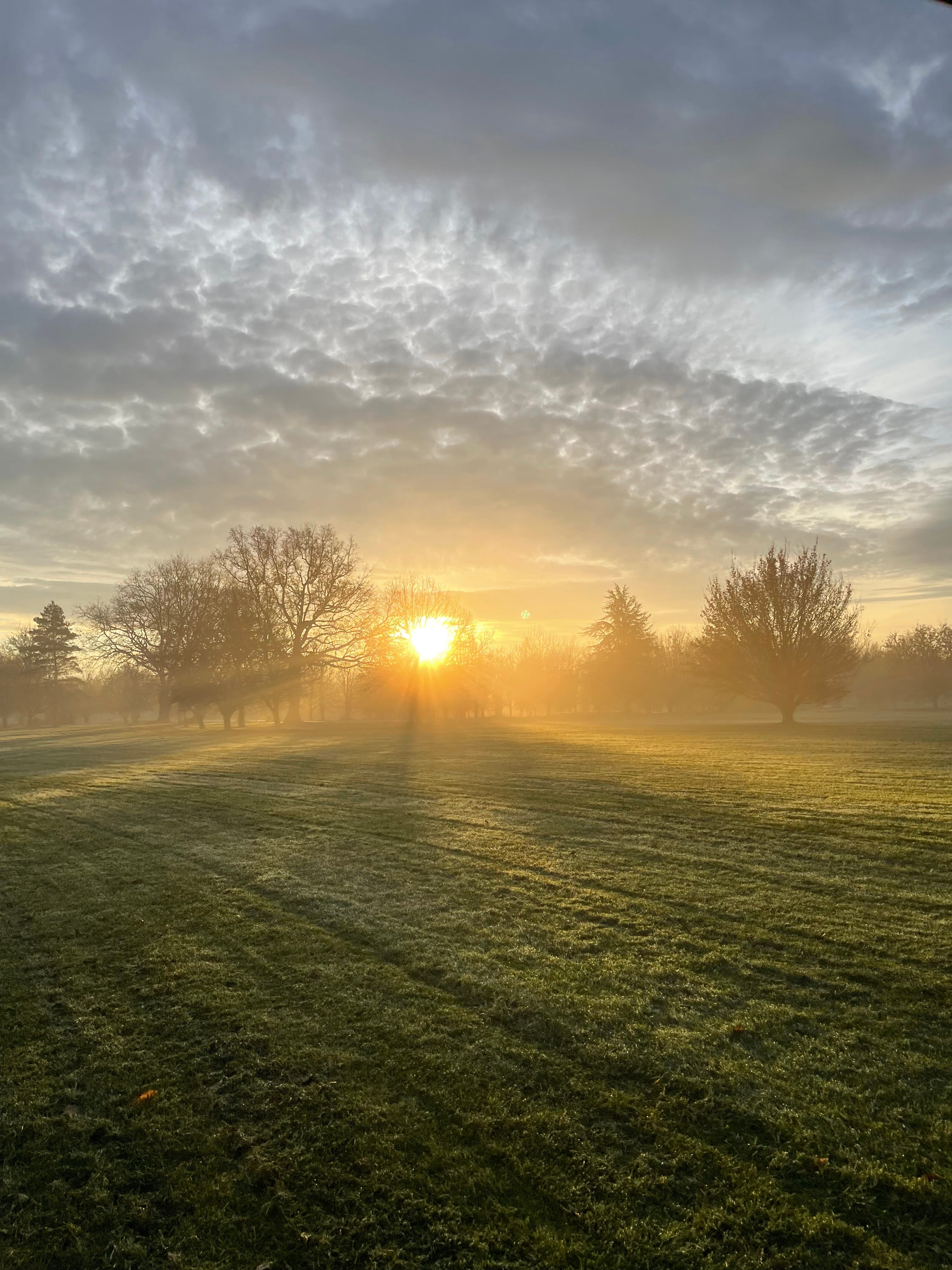
A golf course in France... I'd never thought of that.🙏🏻🌻